VisualSim
VisualSim
is a systems engineering solution for the design, analysis and
validation of the system specification from a concept. This
graphical environment is used to construct distributed, networked
systems and high performance semiconductors such as SoC and FPGA.
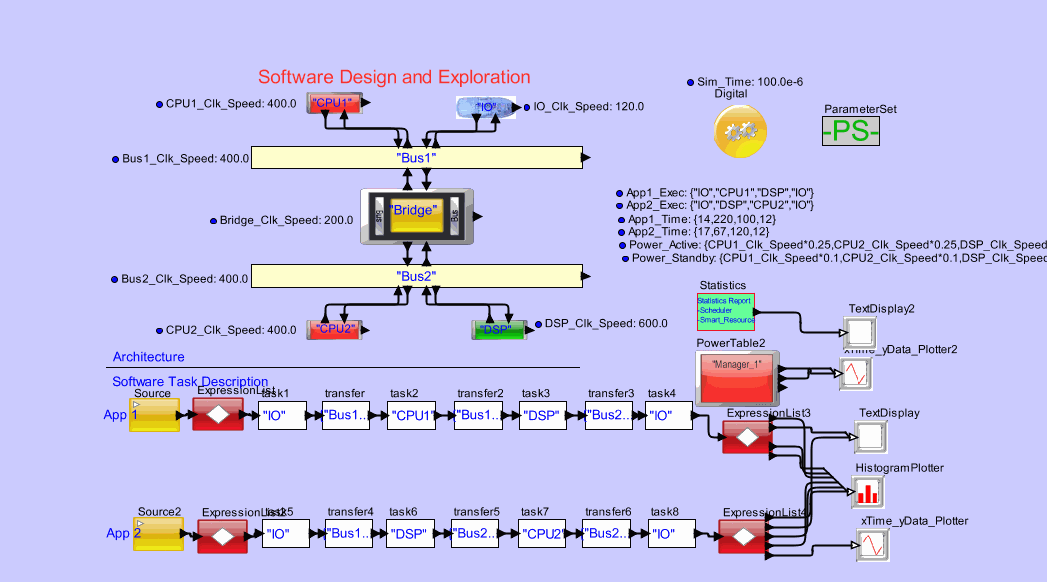
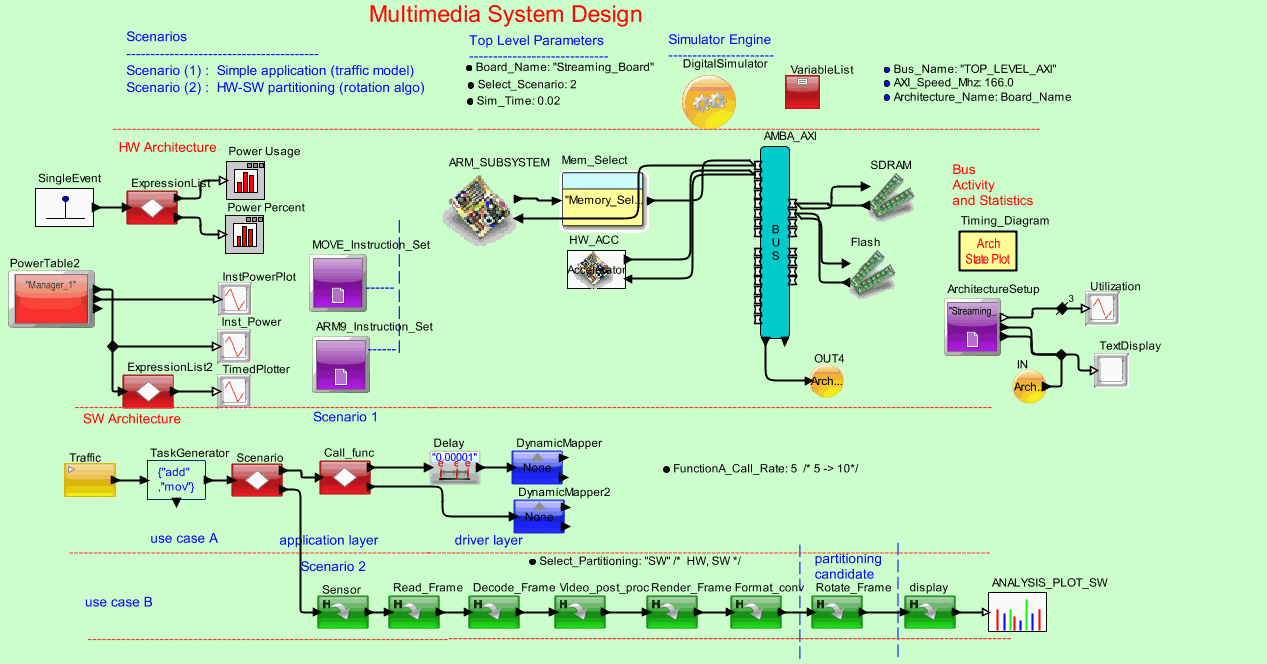
The environment is used to architect the hardware, software and
the communication interfaces between the sub-systems.
The models are used to optimize the architecture, develop a detailed specification;
and generate the test benches and assertions for verification. The models are simulated using a
highly optimized SystemC-like simulator to conduct performance, power and functional trade-offs.
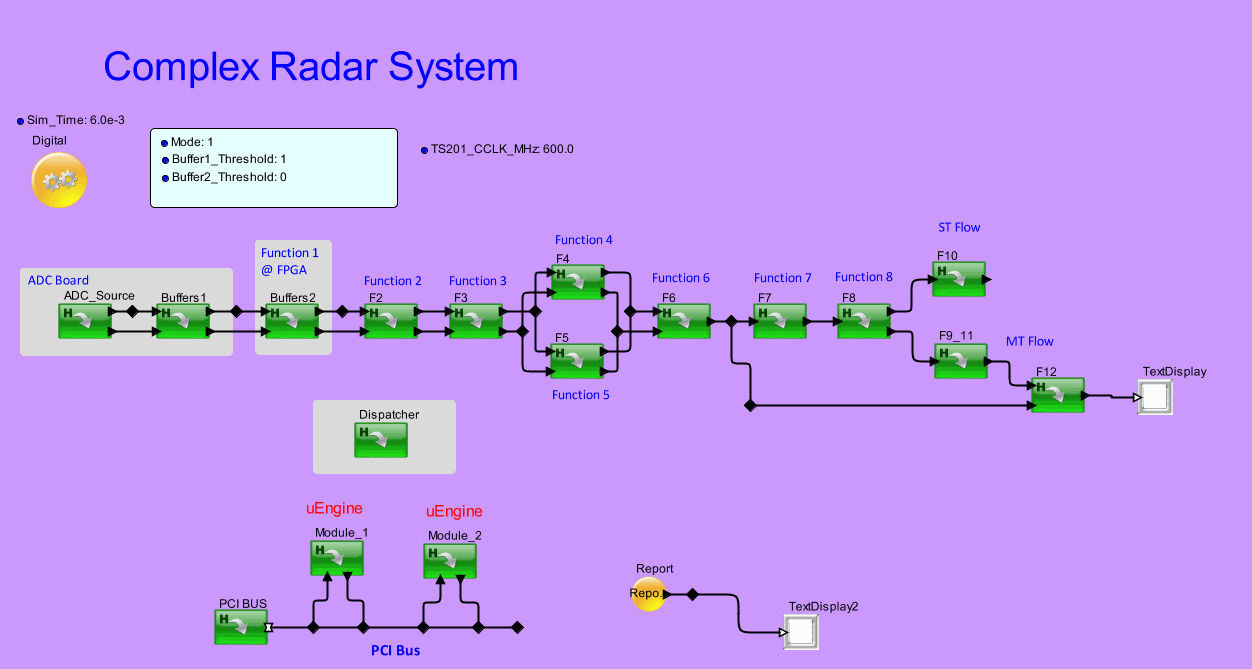
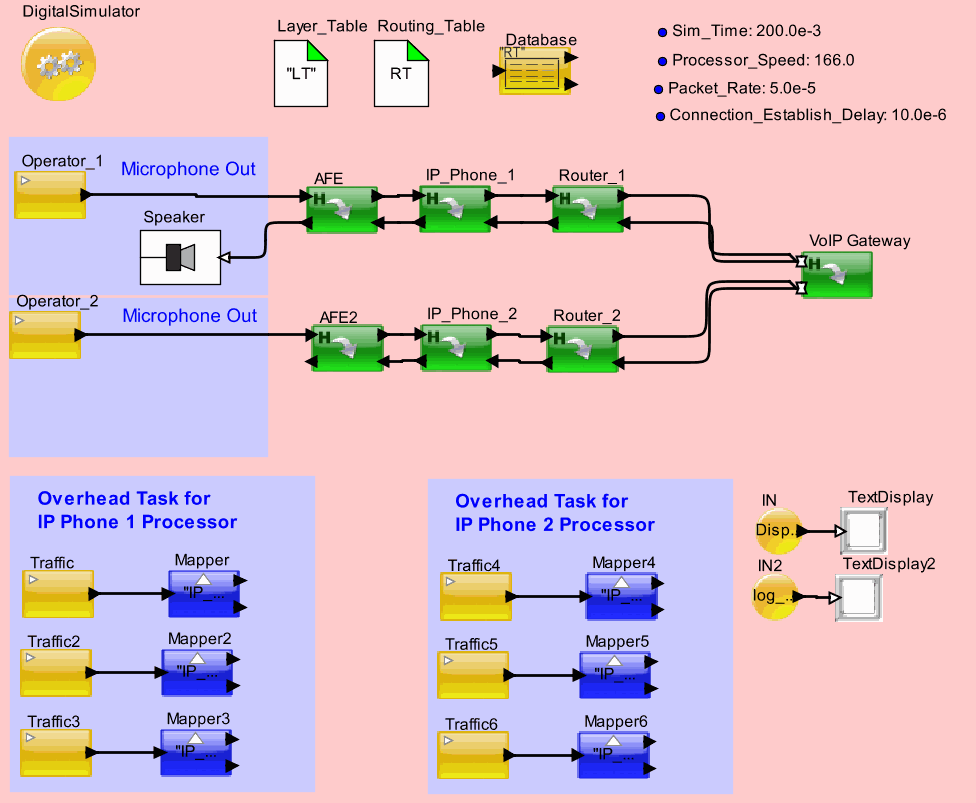
Models of the proposed system are constructed by engineers in VisualSim using pre-built, pre-compiled, parameterized
modeling library provided by Mirabilis Design. These blocks have been highly optimized for simulation performance,
have over 3000 pre-defined reports and are pre-compiled to reduce development time.
Users can also create custom components or import existing one's
written in C/C++/Java/SystemC/Verilog/VHDL. Thee models can be constructed at all Transaction Levels
(TLM 3, 2 and 1). Designers and architects can conduct trade-off studies by varying parameter
values, running different stimulus and modifying the system configuration including the architecture.

The
parameterized libraries contain traffic generators, statistics viewers,
behavior definition language, performance resources, accurate hardware
components and application-specific algorithms. The output from
VisualSim is a highly optimized design and virtual platform to validate
the requirements, verify implementation and provide the stimulus for
verification.
Simulation model can be embedded within
documents for remote simulation execution and analysis from within a Web-Browser without a requiring a
software download.
The
advantage of using VisualSim is the speed of model construction,
ease-of-learning, rapid trade-off and uniform communication across
the entire organization.
For example, a model of a 3G SoC with
multimedia extensions can be construction, validated and analyzed for performance and power in
less than a month. Similarly a model that analyzes the power trade-off for the use of different
hardware technologies in a multi-satellite network can be constructed within a week.
Core Products List
VisualSim Architect
is the graphical desktop application used to construct models,
execute simulation and conduct trade-offs. VisualSim Architect contains
a complete suite of modeling libraries, simulation engines, XML
database, report generators and graphical debugging tools. For
information on standard modeling libraries available with VisualSim
Architect,
click here.
VisualSim Explorer
is a Web Server that enables users to embedded models in documents for access, simulation and
analysis by remote users from within a Web Browser. This way, models originally constructed using
both VisualSim libraries and custom C or SystemC modules can be communciated to non-modelers and
non-programmers.
Libraries and Toolkits (Requires VisualSim Architect)
VisualSim Script
is a scripting language for constructing algorithms, defining logic, managing power and generating
statistics. The library contains a large collection of built-in functions and methods.
VisualSim Architecture Modeling Toolkit
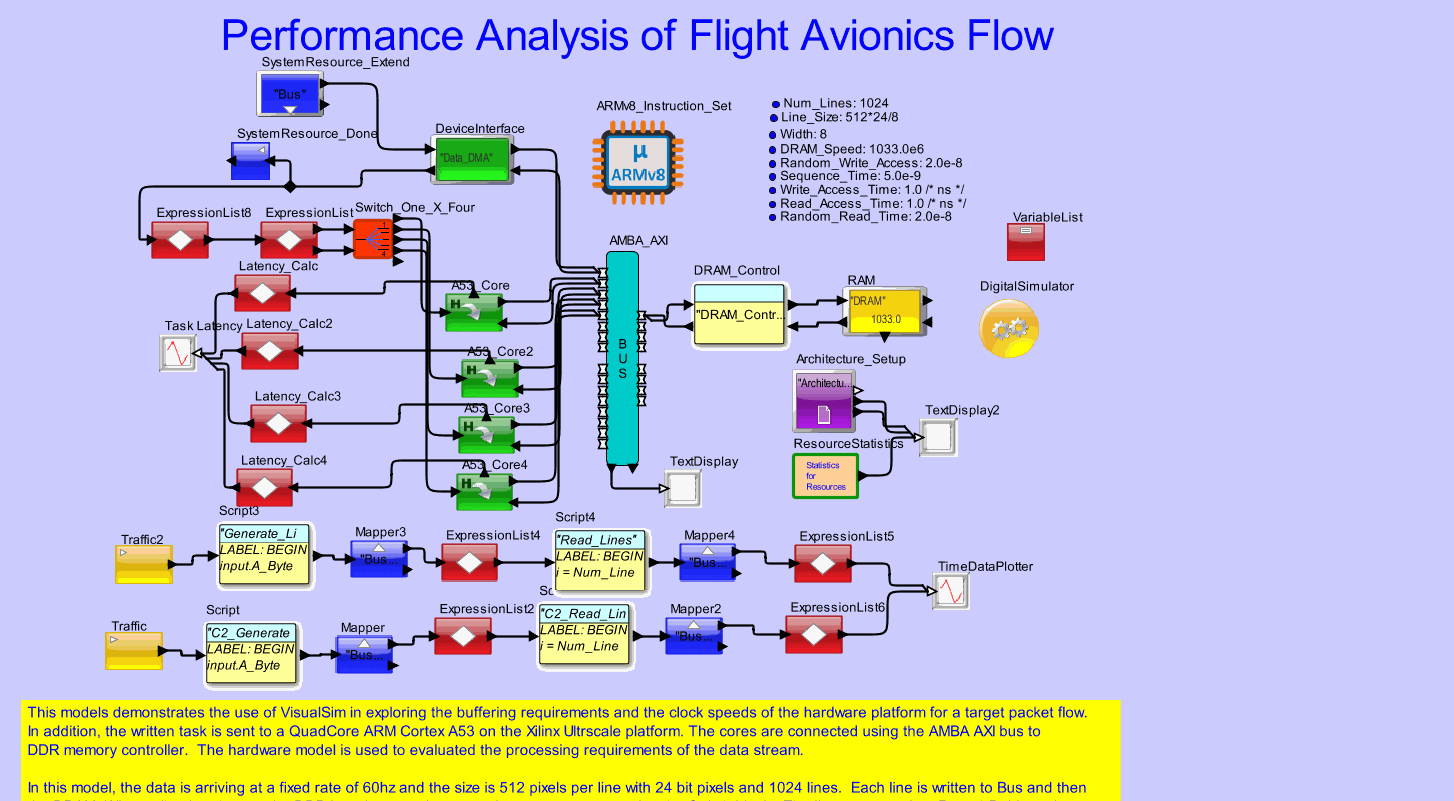
provides generators for constructing instruction- and
cycle-accurate models of processors, multi-cores, memories and other
peripherals. The Toolkit includes vendor processor models,
processor generator to create other custom, standard and
application-specific processors, CPU bus, cache, Memory controller,
DRAM, SDRAM, SRAM and Flash. Using this library, a standard or
proprietary processor can be modeled in less than 4 hours using a Excel
spreadsheet, product datasheet and without any programming. The
generated model can execute software code and is used for architecture
exploration.
VisualSim Bus Switch and Controller Toolkit
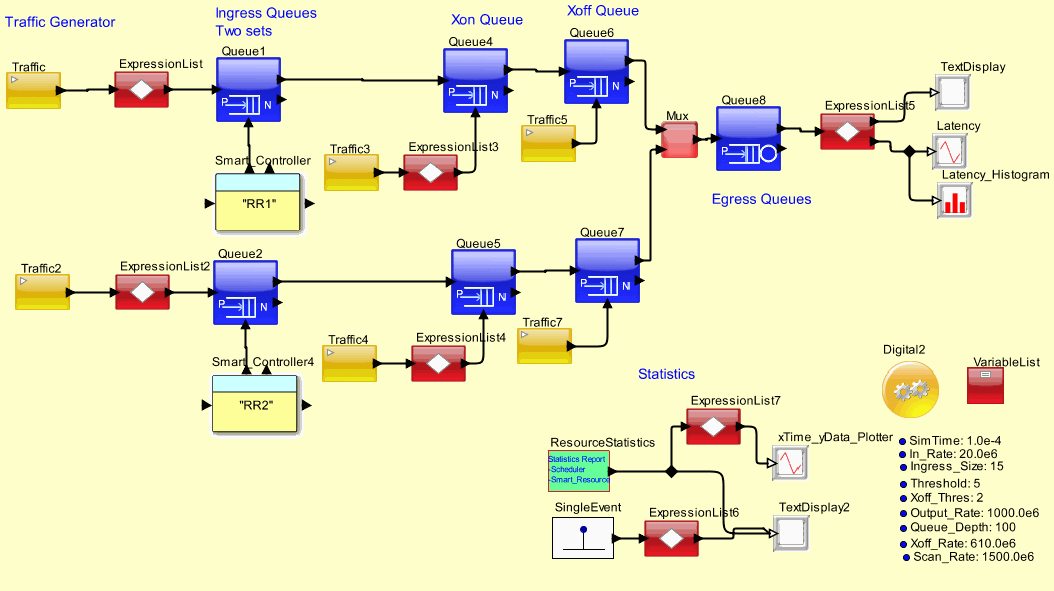
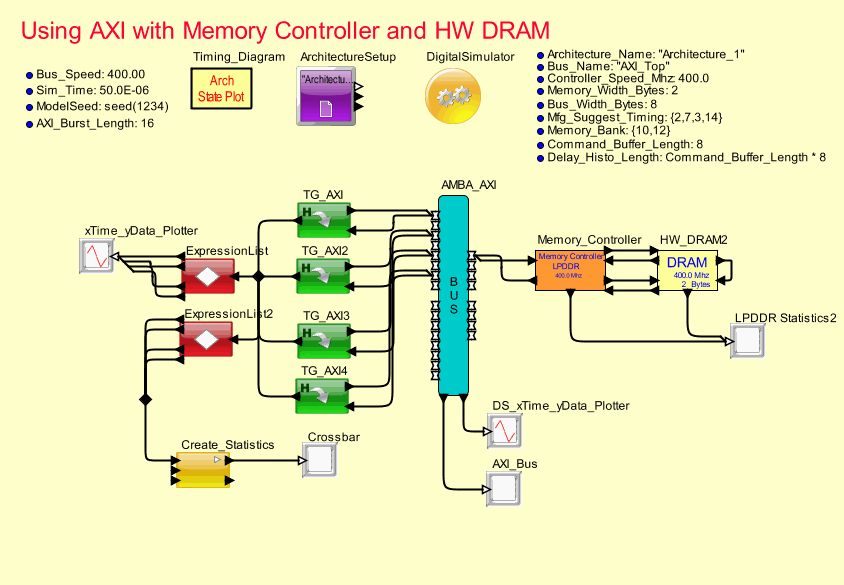
provides generators for buses, controllers, switches and other
control-dominated hardware. These include shared, point-to-point,
request-acknowledge and ring buses; DMA, memory and I/O controllers;
and bridges, switches and meshes. Using numeric parameters to alter the
performance and power characteristics, these generic blocks can be
customized by the user to create standard and proprietary
technologies. Model attributes include arbitration algorithm,
number of channels, speed, burst size and width.
VisualSim Xilinx FPGA Modeling Toolkit
contains models of hard and soft IP/cores that are available on
the FPGA platforms. These include PowerPC, MicroBlaze, DMA, Memory
Controllers, SDRAM, CoreConnect (PLB and OPB), FSL-Bus, Block RAM and
APC.
VisualSim Bus Standard Toolkit
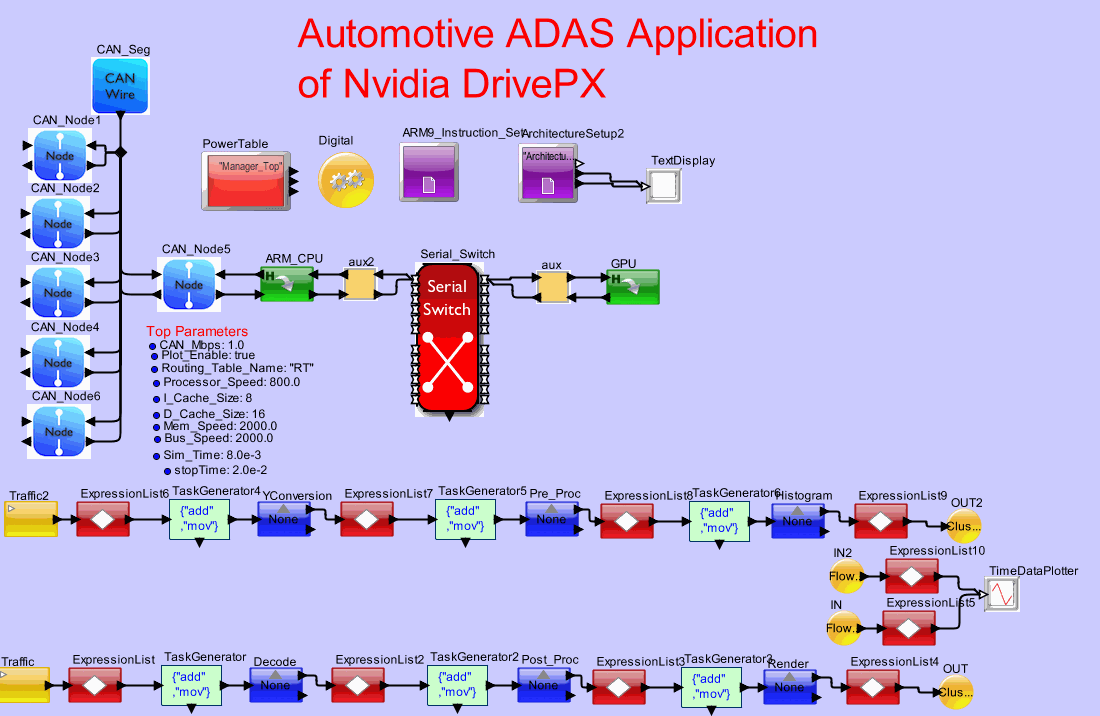
contains models of Industrial, Networking, Computing, Aerospace
and Automotive bus and switching standards. There are are over 30 buses
included in this library. These include PCI, PCIx, PCIe, Rapid
I/O, AMBA 2.0, AMBA 3.0, CoreConnect (PLB and OPB), FlexRay, CAN,
Ethernet Port and Ethernet Switch, VME, SPI 3.0 etc.
VisualSim Application Toolkit
is a collection of modeling components that are focused on
applications markets. These include Networking, DSP, Communications,
imaging, and wireless/ sensor networks.
VisualSim Power Modeling Toolkit
is a power estimation solution that dynamically computes the instantaneous, average and
discharge for individual components and the entire system. No programming or coding
is required from the user to view the results.
VisualSim SystemC
is a SystemC extension to VisualSim Architect to construct models using SystemC modules.
Models containing custom
SystemC components can be simulated with the pre-built VisualSim modeling to accelerate
model development and conducting trade-offs to be constructed and simulated within VisualSim
Architect.
VisualSim Verilog
cosimulates with industry-standard Verilog simulators.
VisualSim STK
cosimulates with Satellite Toolkit 7.1 for dynamic orbital exploration.