

Semiconductor and Embedded Systems Architecture Labs (SEAL) is a learning platform for college students and professionals to augments their theoretical and software skills with with hands-on experience in the latest innovations. SEAL is a learning platform to Visualize, Experiment and Productize next-generation Embedded Systems and Semiconductors using System Simulators. SEAL combines trusted technology content on standards and applications, VisualSim Cloud Graphical Simulation Platform, brain storming questions and answer keys. SEAL is now available for students enrolled in electronics, computers science and computer engineering departments.
The purpose of SEAL is to enable students to get practical experience on emerging technologies and immediately start designing with new standards and applications. The attendee can understand the impact of multi-dimensional changes to the topology, configuration settings and the performance/power/functional impact in the use of different standards.
What is the throughput degradation when you go from a single AXI based SoC to a multi-die UCIe based SoC.
What is the impact on timing deadlines on distributing autonomous driving tasks across ECU on multiple Ethernet segments vs implementing all the software on a single ECU.
How much power is consumed in different orbits of a multi-role satellites?
Which technology is more suitable for a flight avionics system- PCIe vs Ethernet?
The trusted content on the topics have been verified by both a team of industry experts and simulated to ensure correctness. The brain-storming quizzes and the answer key provides all the resources required by the faculty to gauge students learning and provide accurate grades. Students use the simulation platform and associated tutorials to learn how the theory works, how changes impact the responses and how these standards are used in the current design trends.
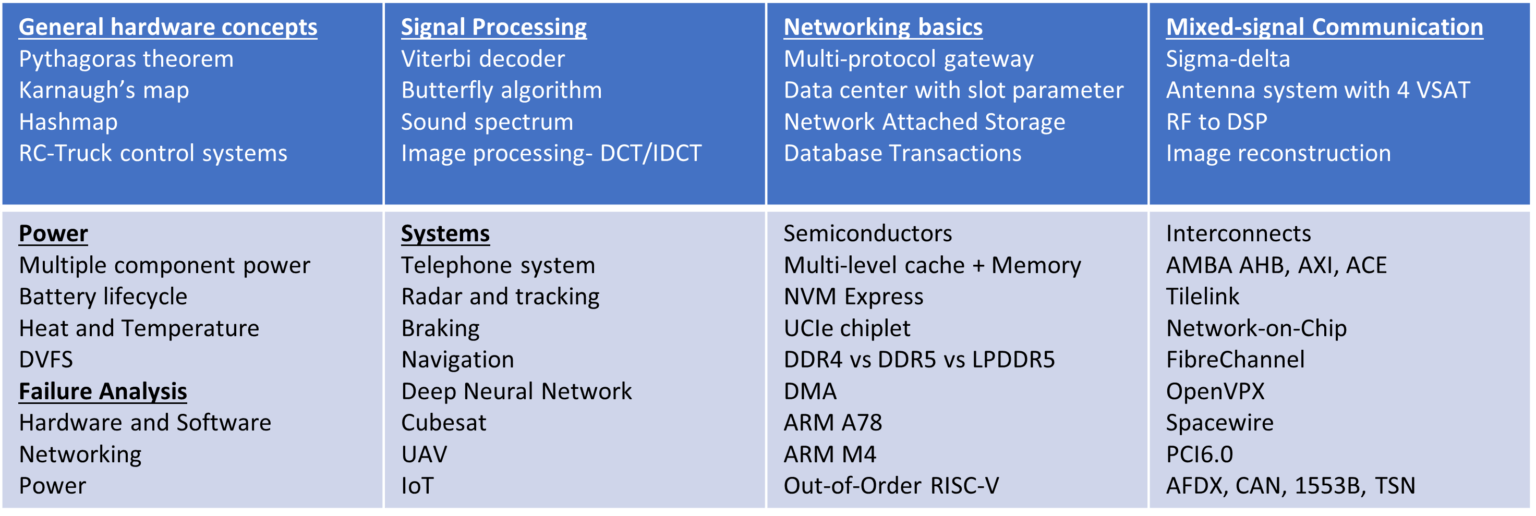
The University Professor gets instant access to 69 standards and 85 applications. Major applications consider are AI, SoC, ADAS, Radars, SDR, IoT, Data Center, Communication, Power, HPC, multi-core, Signal/Image/Audio Processing and Cyber Physical Systems. The following table shows a partial Table of Content of the available tutorials.
SEAL uses the industry-standard and award-winning VisualSim Architect for experiments and interactive studies. VisualSim Architect is being used by 500 architects and designers across semiconductors, automotive, defense and aerospace/space applications. 250 products have been developed using VisualSim Architect. SEAL has been tested across wide range of colleges and universities in all five continents.
To understand how the industry uses architecture studies to design new products, take a look at these case studies.
HPC Processor
Designing Radar Systems
Mission to Mars
Autonomous Driver Assistance System


