Performance
Modeling of Cache Structure
VisualSim
provides a graphical environment to design the cache hierarchy that
will best match the requirement of a particular application. The
analysis can be performance at various level of abstratcion depending
on the analysis requirement. This model generates requests from the
processor at a fixed CPI (cycles per instruction). These are sent
through the hierarchy. The user can set the cache hit-ratio to 1.0
and this will be highest level of cache.
Using
a cache-hit ratio for each stage,
an evaluation is performed to compare
utilization and response times for
various cache speeds and target cache-hit ratios.
The
VisualSim model associated with this description is provided below.
You can view, change parameter values and run simulation right from
within the Web Browser. No additional software is required. This
shows how you can use a pre-built VisualSim model for doing trade-studies.
To use the models at the links,
click on the GO button to run the simulation. Double-click on any parameter in
the model window to change the parameter value.
Click
here to view and execute the VisualSim
model
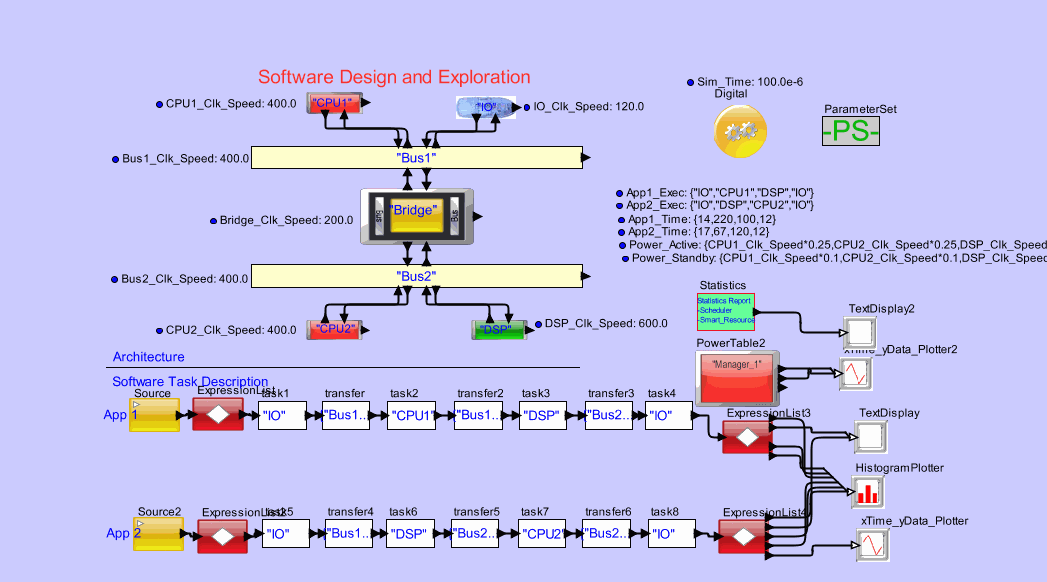
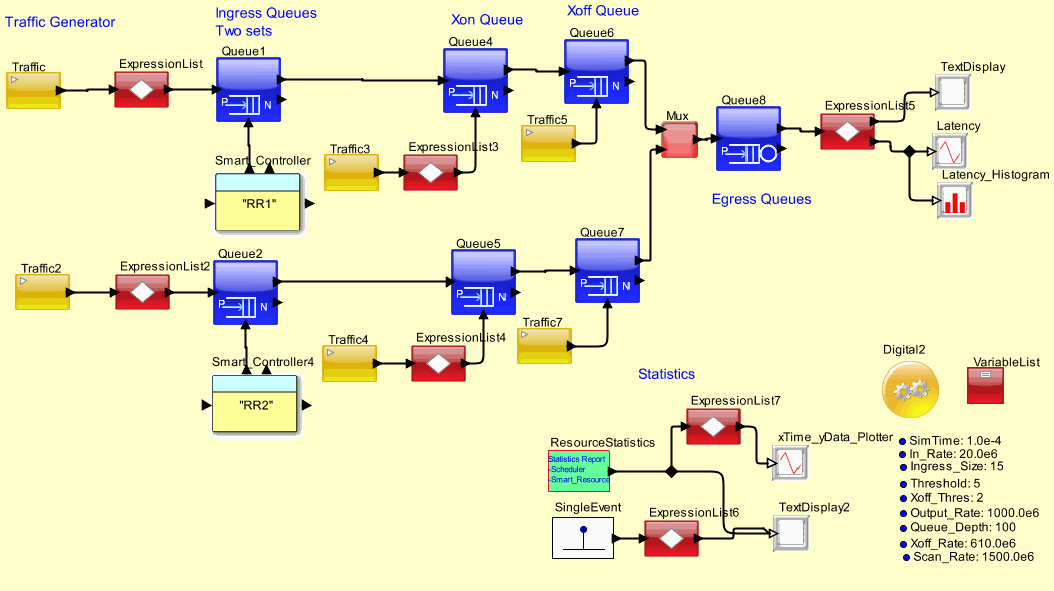
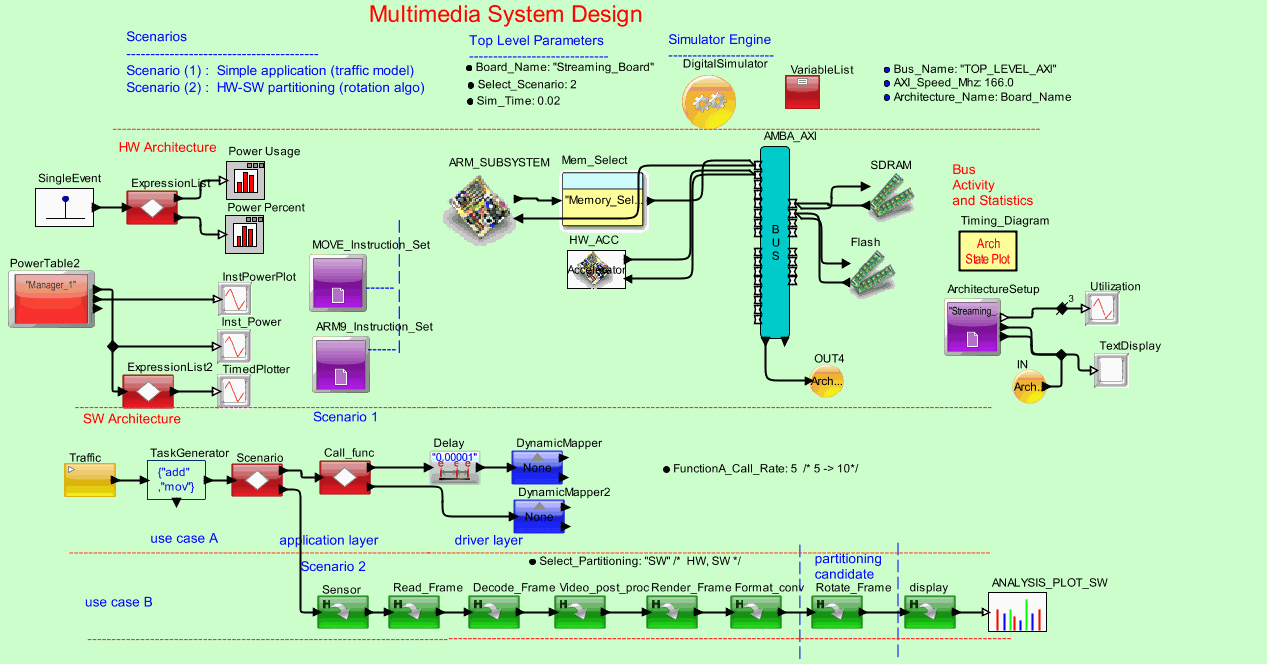
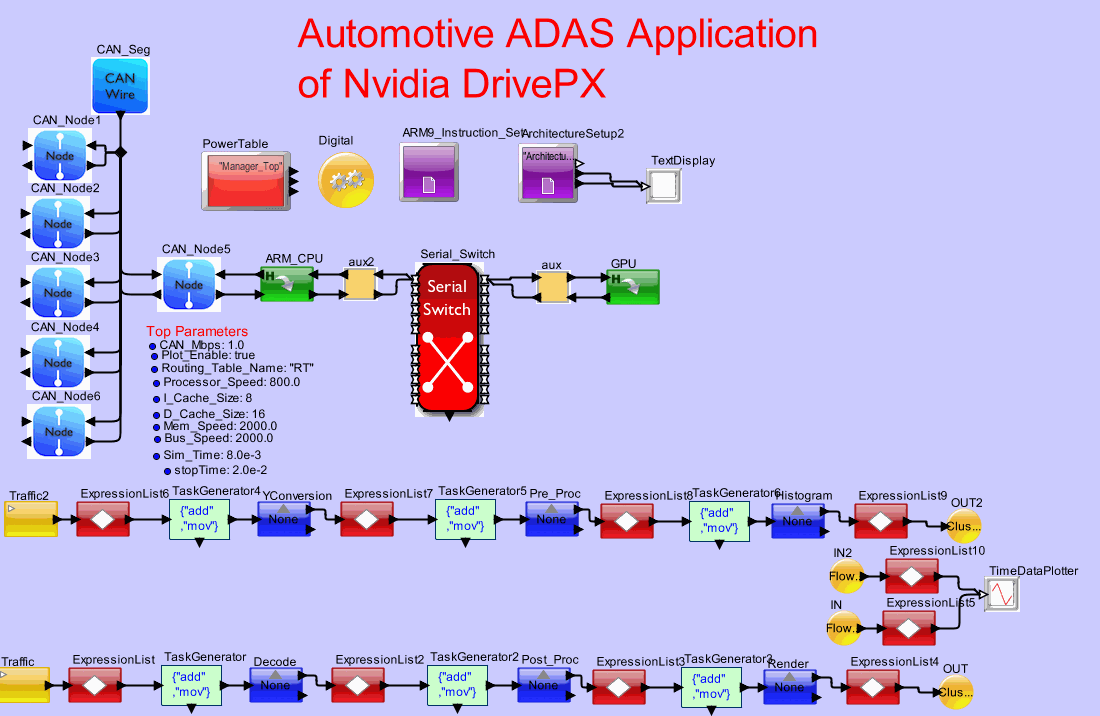
VisualSim is a performance analysis, power estimation
and architecture exploration environment for systems,
SoC, FPGA and real-time software design. The fully
graphical modeling and simulation environment can be used by designers
to quickly capture a model of their proposed system, conduct
trade-studies and develop a highly optimized specification
that meets the end-customer requirements. The environment provides a
complete modeling library and automated statistics generators for
occassional to seasoned designers to get their designs done quickly and
accurately. As 90% of the product cost
and performance are derived during
the early R&D stage, success and
failure is determined by understanding
the traffic and resource requirements
of the proposed solution.
The
model is created using a standard
flow of data model. The traffic
generator in the Processor generates
traffic based on a uniform random
distribution. The caches are all
identical in model. The latency
and queuing are modeled as a FCFS
resource, a standard block in VisualSim.
The hit-miss decision is based on
a random distribution using the
hit-ratio parameter value that is
provided by the user.
This
model uses 4 pre-built building VisualSim blocks
to construct the whole model. The ease-of-use and the
rapid learning makes VisualSim particularly suited for quick trade studies..